Wednesday, January 21, 2009

On Sleep Deprivation and Stress

This thread may be relevant to the more stressed-out or sleep-deprived students out there (I can think of some adolescent immigrants I know [deep breath, all]). Basically, it details some strategies for coping and calming down if and when your stress levels are disrupting your sleep. The author is a graduate student who has stress-related insomnia. Because the forum is password-protected, I've taken the liberty of cutting and pasting a long excerpt below:

I live near a prominent university sleep clinic, and visited them about my problem. I thought I would share some of what the sleep psychologist told me...

1) I have difficulty calming down at night (ruminating thoughts, anxieties about what I have or haven’t accomplished, bad feelings surrounding interactions I had during the day... you get the picture). Although my sleepiness is able to override this state of anxiety/upset initially, eventually it catches up with me and I am awakened...

2) So, the key is to learn how to negotiate the arousal system during the day, so that it will naturally back off at night like it’s supposed to. Several strategies were offered:

a) learn to pay attention to the intrusive thoughts that crowd my head during the day. Keep a small notebook handy, and as they pop in jot them down on the notebook to deal with later, then let them go for the moment... Then, designate a structured “worry time” in the day. This is a time where I sit down with that notebook and give free reign to all the anxieties, stresses, and bad feelings. Journal about them, think about them, generally try to be aware of and process them. Not to fix them or figure them out, just to be aware of them, confront them directly. Freewriting for anxiety is the basic idea. Then, when the designated time is over (30-60 minutes was suggested), I put it away, rip up the freewriting if I want, whatever. That’s done for that day. [what seems to be happening alternatively is that my psyche is “stealing” this necessary time late at night or in the early morning]

b) at the end of the workday (and the workday must end a signficant amount of time before I go to sleep), learn to write down what I accomplished (any little thing is fine, even if it’s just grocery shopping or the like) and make a plan for the following day. Again, put it away when that is done (unless I’m suddenly inspired or eager to do a particular task that came up, in which case I should just do it), and then start the next morning from that place. I know a lot of people do this on the board, although I think it emphasizes more reverse-pacting then most of us tend to do.

c) never never never try to put myself to sleep. She said that people confuse being tired with being sleepy. Tired is when you feel exhausted in your bones, sleepy is when you can’t keep your eyes open. Your body will take the sleep it needs, and you should only go to sleep when you feel sleepy. When I find that my eyes are closing, then I should get into bed, but if I end up laying there awake for more then 10-15 minutes I should get up and do something else (something nice and enjoyable, not work) until I feel sleepy again. She said not to worry if I don’t end up going to sleep until 3am some nights, just roll with it. Eventually my body will even itself out if I’m not getting enough sleep.

d) related to c), always set an alarm for the same time every morning, and don’t stay in bed for longer than, in my case, 7 hours total (this is because that’s what I’m averaging of sleep these days... it would be different for someone else). Having a regular time that I get up (not allowed to oversleep the alarm for more than 10-15 min) may be hard at first, especially if my falling-asleep-time is erratic, but eventually my body will adjust. Their research shows that if you condense the time you stay in bed your body will learn to take better, more restful sleep. The idea is to avoid what I’ve been doing, which is essentially being in bed for 9-10 hours but only getting 7-8 hours of sleep. Supposedly if I only allow myself to be in bed for 7 hours, there may be nights in the beginning when I only get 5 hours of sleep but then my body will get wise to the limited window of opportunity it has to sleep, and get a little more greedy about those 7 bedtime hours. Then I can start lengthening that a bit to get myself up to the 8 hours which is more desirable for me.

e) Naps are good, and not only permitted, but welcome! Who knew? But only 30-60 minutes--an alarm has to be set. 30-60 minutes is refreshing, longer is bad.

f) Meditative practices like mindfulness and yoga are good. That one’s not hard to guess. Very related to the anxiety issue... learning to be aware without self-judging, learning to be quiet with yourself, etc.


Many of these practices are useful, not only in managing insomnia, but also in managing stress in general.

Tuesday, January 20, 2009

A Must-Read Article from Gladwell on Teaching


This piece is classic Malcolm Gladwell: thought-provoking and highly entertaining, if also somewhat reductive. Very much worth a read.

Gladwell also has a follow-up post on his blog that fills out the picture somewhat.

Both posts remind me very much of an article called "Deep Smarts" that I read years ago in the Harvard Business Review, one that (I thought) stated the basic problems and possibilities of student teaching than anything I've read since. Apparently the article has also become (had already become?) a book, one that is receiving excellent reviews on Amazon. Here's a summary of the concept from one of the Customer Reviews at Amazon:

"The authors defined 'deep smarts' as accumulated knowledge, know-how, and intuition gained from extensive experience. Deep smarts are more than competence, but 'the ability to comprehend complex, interactive relationships and make swift, expert decisions based on that system level of comprehension but also the ability, when necessary, to dive into the component parts of that system and understand the details.' These individuals have capabilities that those with less expertise do not have, allowing them to interpret small variations in data that elude novices, make decisions quickly, or know when they are encountering a rare event and evaluate its possible outcomes quickly. This level of expertise often requires ten years to develop and [those who possess such 'smarts'] get results that novices and those who are merely expert cannot."

While this book focuses particularly on how to pass on expertise that has been acquired through experience, my hunch is that the authors' observations might also help us understand how to pass on other kinds of expertise: for instance, how to help mediocre teachers acquire the same faculty for expert judgment that gifted teachers seem to possess naturally. The description of deep smarts given above certainly resonates with the Gladwell article and also seems to describe the competencies that differentiates effective teachers from their ineffective colleagues: great teachers certainly "comprehend complex, interactive relationships"; they "make swift, expert decisions"; they possess the "ability, when necessary, to dive into component parts of [a system of relationships] and understand details"; they "interpret small variations in data"; they "make decisions quickly": and they "know when they are encountering a rare event."

Another connection: The steps described in this book (for helping novice workers grow into expert workers) sound much like what I've heard about mentoring young readers, and I'm curious about whether the book would shed any light on the Gradual Release of Responsibility model, the best way I've learned to teach complex skills in the language arts, and one that essentially codifies the process that the best teachers often employ naturally (or so it seems to me). Put differently: not only teaching, but also reading and writing, seem to require "deep smarts." I wonder whether Leonard and Swap's book might shed some light on this particular pedagogical problem.

If I find the $20 for it, I'll write a follow up!

P.S. More from the "Deep Smarts" article: "Raw brainpower, emotional intelligence, and intuition are often part of the mix, but the essence of deep smarts is a knack for combining big picture thinking with technical or managerial knowledge." To me, that's great teaching in a nutshell: combining big picture thinking (say, sensible long-range course objectives) with technical knowledge (say, the nuts and bolts of pedagogy).

A Must-Read from Gladwell on Teaching


This piece is classic Malcolm Gladwell: thought-provoking and highly entertaining, if also somewhat reductive. Very much worth a read.

Gladwell also has a follow-up post on his blog that fills out the picture somewhat.

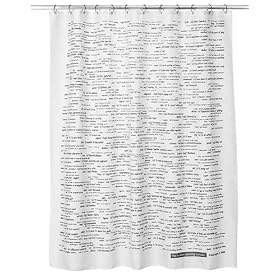
The Top 500 SAT Words Shower Curtain


At Amazon, of course. I can't read all of the words in the photo, but those I can manage to decipher are genuinely good ones to know. It has a five star rating, nonetheless.

Saturday, January 17, 2009

The "Random Persuasive Speech Topic Generator"

Fully awesome. Go to the site, scroll down to the application itself (past the ad), and hit "go." A never-ending series of topics awaits you!

This application is part of 5750+ Speech Topics, also a highly useful site: it was developed as a source of great speaking topics, but it would be a fantastic source of writing prompts as well.

Wednesday, January 14, 2009

A Million Words Per Grade Level?


One of my books on reading pedagogy suggests that a hundred hours of reading intervention typically improves reading ability by one grade level. The book isn't very specific about whether those hundred hours are to be teaching time or student reading time, but I've fudged it a little: I have sometimes assumed, however imprecisely, that the "hundred hours" refers to time spent reading, then used the "hundred hours reading equals one grade level improvement" figure for planning purposes. I also make this calculation because it seems basically plausible to me: a student who spent an hour a day reading over the summer would have read about a hundred hours, total, and would have improved his or her reading speed by at least a grade level, estimating conservatively.

Today, I used that figure to calculate how many words a student would have to read in order to see that one grade level of improvement. To do so, I assumed that the student read 150 words a minute, or approximately the rate of ordinary speech. (Kids should learn to read faster than 150 words a minute, of course, but many struggling readers and ESL students subvocalize constantly, so the 150 figure seemed like a good starting point.)
100 hours * 60 minutes per hour * 150 words per minute = 900,000 words.
No wonder I can never seem to keep enough books around the Center. One hour a day over the summer adds up to almost a million words of reading?
I'm going to round that figure up slightly for convenience' sake and create a new rule of thumb: a million words of reading, or one hour a day for a hundred days for the slowish reader, produces one grade level of improvement in reading speed.
To put that figure into perspective, a million words is approximately as many words as are in all the works of Shakespeare. It's about a quarter of Dickens' total fictional output. It's also about 15 to 25 young adult novels...yes, that last part seems about appropriate for a summer.
Put differently, a student who is three grade levels behind should make it a goal to read 45-75 easy, or level-appropriate, books.

A Great Source of SAT and SSAT Examples

Try the "Find Your Mentor" utility at this DC website to locate the famous American who is most like you. Then go read the profile of that person to learn enough specifics to write about them. You might also use this site to get some ideas about for research topics.
One more thing: the trick to finding great examples for standardized tests is to write enough practice essays that you start re-using the same evidence over and over again. So try to do a little reading, and then see which one of the accomplished Americans you encounter starts showing up again and again in your writing.

Useful Shakespeare for Kids Library

...right here, from the Folger Shakespeare Library. Highlights include some nice critical introductions appropriate for the young reader, some historical background and context, and an improbable but informative tutorial called "Shakespeare in American Life for Kids."

Great Vintage Children's Books, All Color, All Online


Clicking through the federal government's website for children today looking for articles to adapt for nonnative speakers, I stumbled across a great collection of old children's books, all (or most?) with beautiful illustrations, all in high-quality .pdf format. In addition to The Square Book of Animals featured above, the site also contains a lovely old Alice in Wonderland, an illustrated Wizard of Oz, and a number of other texts that were entirely new to me. 

An Online Quiz For Kids: "Who's Your Role Model?"

From the Academy of Achievement in DC, here's a fun place for junior high and high school kids to find topics for reports, personal reflections, or research papers that may resonate with them personally. Not a bad place to find examples for SSAT and SAT essays, either. It's an online reference website filled with profiles of famous or accomplished Americans, and it features a little utility that will match kids with their "mentors" (famous American role models) on the basis of their dreams, values, and obstacles.


Sunday, January 11, 2009

Real SAT Explanations: Where to Find Them

At least one site of which I'm aware, Mystery Tutor Vault, has a neatly organized set of explanations for all the questions in the famed Blue Book, brought to you by the makers of the real SAT. I haven't spent much time on the site, but what I see looks useful, though not revelatory.
There are also several fora online (College Confidential comes immediately to mind, of course) where you can go for help with SAT questions.
Eventually I'd love to provide my own online commentary on the Critical Reading section in particular, but that project is pretty far down on the list at the moment.
Of course, you can also buy books of solutions, but the only one I've looked at carefully is only moderately helpful. It's far better than having no explanations at all, however. It's sold by TestMasters. Finally, someone out in California has published a set of solutions that is getting fairly good reviews on Amazon. I have not looked at this volume yet, but I probably will within the next few days. 

...

Um. 

I think all that you need to know about this blog is that its author apparently designed this T-shirt.

What a Great Way to Construct a Senior Thesis Project

One of the odd perks of my job as an ESL teacher and a literacy specialist is that I get a birds' eye view of a lot of other people's course planning. Yesterday at work, for instance, in addition to running a large number of scanning drills, giving my seventeen-year-old students hell for not learning words, and spending two hours scouring the Internet for a strong anthology of fiction for elementary-aged children (suggestions, anyone?), I got glimpses into several really interestingly planned literature classes that several of my ESL students are taking at school. One local tenth-grade teacher is presenting Alexander Pope's "Essay on Man" alongside Frankenstein, a pairing that got my brain working. I also had a chance to discuss, at some length, the problem of just how to deliver a poem that you've memorized, which is a really interesting question and one that in some ways I think you never really outgrow. 

Perhaps the highlight of my Saturday, however, was a chance to observe the unfolding of a really excellently planned series of twelfth-grade English assignments, ones leading progressively toward a senior thesis. I've never seen a senior thesis project so sensibly progressive, so developmentally appropriate, and so (in my opinion) consistent with the best practices of English criticism as a discipline. Like most of the really great curriculum design I've encountered in the last five years, it was also deceptively simple. 

The first thing I loved about this assignment is that it taught the student to place the works of literature in the context of other, directly relevant primary texts, instead of either reading the work in a vacuum (a common approach) or asking the student to rely on secondary sources for context (also common). The teacher allowed the students to choose their own topic but required them to focus on a single major author (say, Fitzgerald) and read several works of literature by that author (say, The Great Gatsby, This Side of Paradise, The Beautiful and Damned, and Tender Is the Night, as well as perhaps some stories and essays). 

In my opinion, this requirement represented a great course planning decision both because it was very appropriate for high school seniors and because it reflects the way that the best critics and readers proceed. In a couple of cases, while a grateful guest in Harvard's GSAS program, I heard a couple of truly world-class scholars spell out their approach to close reading and contextualizing primary sources. In both cases, the scholar began by a close reading of the text itself, and then began by placing the text in the context of other works by the same author, then in works of the same period. This procedure tends to be carried out very deliberately in the fields of both history and English, and in many ways, it's a very obvious progression, one that's far more central to the humanities as they are practiced at the highest levels than is the reading of secondary sources (about Fitzgerald the Jazz Age, for instance). But we rarely pass it on to young  students. Requiring high school seniors to read several novels by one author as part of a capstone project is a deceptively simple way to pass on a truly critical reading skill.

What's more, it's a very appropriate to the twelfth-grade classroom because it requires students to accomplish a novel and unfamiliar task, but it allows them to employ very familiar skills in the process. In my opinion, this type of apparently effortless building on past mastery is a hallmark of great curriculum development.

Other things I have liked about the assignment as I have watched it unfold, over my own student's shoulder, as it were:

1. It begins with the familiar (writing several essays on individual novels) and moves progressively and predictably into unfamiliar territory. This sounds as obvious as the rest of it, but so often teachers will suddenly jump into the deep end: you've been writing three- to five- page papers about specific topics, and now you can write a ten-page paper using extensive secondary sources on a topic you've never encountered before in your life. Too much novelty! Too much!

2. The teacher dealt directly with new tasks instead of relying on students to pick them up through immersion. She named them ("now we will learn to synthesize our analysis of individual works,") she defined them ("here is what it means to synthesize our analysis of individual works,") she introduced them gradually into her progression of assignments ("now we will start to synthesize, which we will be doing more and more"). I will assume that she also provided models and constructive feedback regarding the new task, though I didn't have a chance to observe her doing so. As a result of this directness, she both made it easier for her students to pick up the new way of doing things and also helped them to develop metacognition, a fancy word for readerly self-awareness. Finally, she helped those students without an obvious gift for literary analysis keep pace with the rest of the students (the problem with purely immersion-based learning is that the rich tend to get richer and the poor, poorer).

Again, this activity sounds so simple that you may wonder why it made me smile so much (which it did). The reason is very simply that it's so often missing from high school courses. Very often, less able teachers will expect students to pick up a new skill by immersion, setting a course pace that will allow most students do so successfully. They will, for instance, assign the students' first 10-pager without ever directly addressing the multitude of individual tasks that a 10-page paper requires and that the 6-page paper does not. A 10-page paper, for instance, can often benefit from an entire section of background information or context that would be out of place in a 5-page paper. Likewise, a 10-page paper often requires a much narrower topic than a 6-page paper, but most students, left to their own devices, will choose a much broader topic for their first long paper than they choose for their shorter papers. Successful high school teachers often identify as many of these issues as possible in advance and address them with the students directly. 

It's always a pleasure to see one of my own students working directly with a very able classroom teacher, and I always learn a lot from observing such expert syllabi and assignments when they pass through my own classroom. Classes like that one make up for all of the unteaching that I occasionally have to do (no, Beowulf is not an allegory about the seven deadly sins; no, Emily Dickinson was not sleeping with Henry David Thoreau!). 


Saturday, January 10, 2009

Q&A with Admissions Deans at the New York Times

This very useful Q&A has been up for a few days now. It includes responses to a large number of questions from the admissions deans at Yale, Pomona, Lawrence, and UT Austin. Highlights for me:

Everybody knows...that some colleges care less about Writing than about the other two sections.
But not everybody knows...that the Writing section of the test is becoming a more widely accepted part of the process, even at schools that used to be strongly opposed to the New SAT. I was somewhat surprised to hear the Yale dean speaking more or less positively about the Writing section of the SAT: for a while there, Yale was throwing out Writing scores as irrelevant.
Everybody knows...that your applications essay will get probably read quickly.
But not everybody knows...that competitive schools such as Pomona and Yale may only look over your essay, rather than actually reading it, unless the rest of your file is good enough to get you past the first cut. I valued the candor of the Yale and Pomona deans here. The Yale dean's remark is particularly revealing: Mr. Brenzel says, "We look at every essay from every applicant, and for students who reach the level of serious consideration, essays may end up being read multiple times." In other words, the essay is most important at your match schools, and often unimportant at your reach or super-reach schools. Why should you care? Here's why: it is almost always a mistake to spend a million hours on your college essays senior fall, hoping that they will work a miracle for you, when you could be acing your classes or getting another powerful score on an SAT Subject test. It's your numbers that will get you past round one. 

Thursday, January 8, 2009

Ten Ways to Handle Test-Taking Anxiety

Every year, it seems, I hear of a student who aces the SAT again and again and again in practice sessions, and then performs hundreds of points worse on the real test. Testing anxiety is one of the very few obstacles that can't always be overcome through additional preparation: even the most overprepared students sometimes find themselves at the mercy of panic attacks. What to do?
Everybody knows...that the solution for anxiety is to be as prepared as possible for real testing conditions.
But not everybody knows...exactly which conditions to recreate, or how to recreate them, in order to beat your nervousness.
Here are a few principles and strategies that can help you feel calm and do your very best when you sit down for the real exam.
1. If panic sets in, start by making notes on your test. To get your focus back, use your pencil to help you concentrate. Locate the main idea in a text and underline it. Draw a diagram to help you visualize the math problem. Go through the passage and put marks in the margins by all of the line numbers that relate to specific questions. By writing, you are doing something physical that will help you focus on particulars and settle in to the questions. 
2. Start with the easy stuff. Of course. If you feel boggled, move on. Come back once your confidence is back.
3. Have small habits and rituals that help you take the same approach to the questions and to the passages every time. As much as possible, you want all your good habits to be reinforced by external or physical behavior, like making particular notations on a CR passage, or even silently mouthing key phrases. Often, these habits take the form of particular notations. Always put a check by the main idea of a CR passage, for instance. Develop a shorthand or a code for identifying question types. These little physical behaviors will force your mind to start working and will kick your habits into gear. 
4. Two nights before the test, get an excellent night's sleep. Avoid caffeine on Thursday afternoon and evening. Clear the evening on your schedule in advance and say no to your friends. Go to bed early Thursday even if it means leaving homework undone.
5. The night before the test, have a solid, sensible dinner, and then get a good night's sleep.
6. The best breakfast or morning routine on the day of the exam is whatever you normally do.  If you plan to do something different (say, you never eat breakfast but you want to have breakfast on the morning of your SAT), create a new habit starting now instead of making a big change on the day of your test. If you don't usually drink caffeine in the morning, the big day is no time to start experimenting. If you usually have breakfast, have breakfast. If you don't usually have breakfast, be careful: don't make yourself queasy by eating at a time of day when your stomach is unused to being fed.
7. Take between two and four practice tests before you sit down to take the real thing. (Some students may benefit from taking significantly more than four practice exams.) These tests must be real College Board SATs.
8. Set a reasonable goal score for each practice test just as you would for the real test. Many students set no real goals for practice tests except to do the best that they can. For real tests, however, they set clear, numeric goal scores, which can feel like personal benchmarks for success or failure. These goal scores produce pressure, which may in turn produce anxiety.
It's important to practice the test under the pressure that a goal score can create. At least one week before each practice test that you take, choose a reasonable goal score, and sit down to take the test aiming to achieve a specific score, just as you would for the real exam.
9. Take the test under timed conditions if at all possible. Schedule the time in advance. Find or create a truly quiet, undisturbed location for your practice exam.
Most of my students balk at this condition: they want to take the whole test in sections, bit by bit. Taking the whole test at one go under time pressure can be both intimidating and exhausting.  Ironically, this is exactly the reason that you should practice the whole test straight through under strict timed conditions: you need some practice facing down the beast so that it won't freak you out on the day of the actual exam.
The best way to make sure that your practice test actually happens: take it with somebody else at a quiet location away from home. Either sign up for a class or make a pact with a friend to meet at the library once a month. 
10. Remember: the SAT is only one piece of a big process!
Best of luck to you!


Wednesday, January 7, 2009

Electric Chalk, my latest find, is a website (and blog and forum) mostly devoted to pedagogical innovation and the use of electronic resources in the classroom. Cool. I stumbled across them by following a link from my favorite online timer. 
Electric Chalk, my latest find, is a website (and blog and forum) mostly devoted to pedagogical innovation and the use of electronic resources in the classroom. Cool. I stumbled across them by following a link from my favorite online timer.